The Shift from Training Runs to AI Factories Is Already Happening
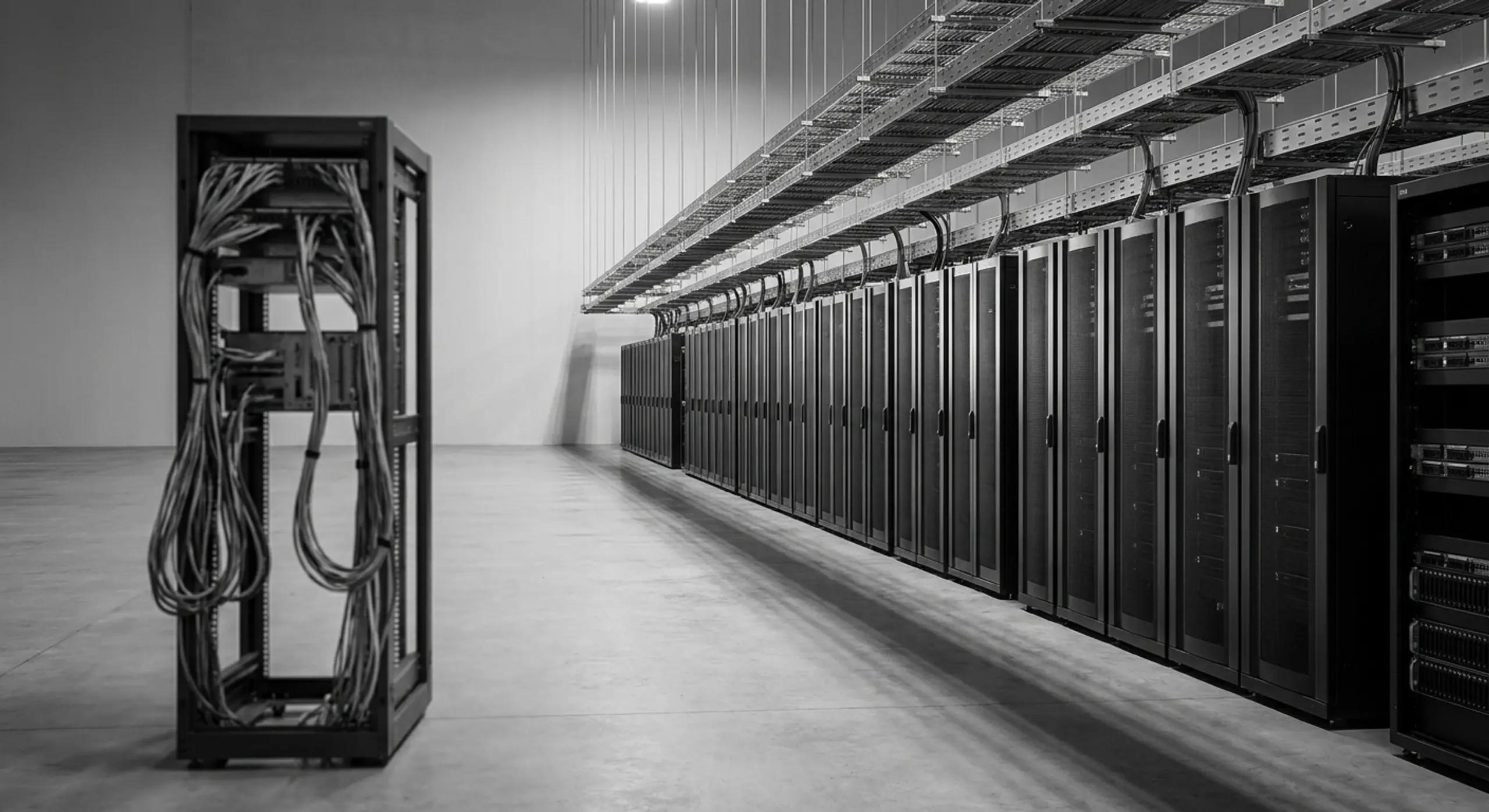
Ten years ago, when the first DGX systems shipped, “AI infrastructure” meant one thing: a place to train a model. Enterprises weren’t downloading pre-built models from a hub — there was no hub. If you wanted AI, you built the model yourself, got a result, refined it, and trained again. Infrastructure was sized for that single workload.
That world is gone.
The enterprises we work with today aren’t asking how to run a training job. They’re asking how to run an AI factory — an environment that has to train, fine-tune, and serve production inference on the same infrastructure, for multiple teams, against constantly changing data. The demands on compute, networking, and — critically — data infrastructure have shifted underneath the industry in the span of about 18 months. Most enterprise roadmaps haven’t caught up.
Here’s what we’re seeing, and what we think matters most for the infrastructure decisions enterprises are making right now.
The primary workload isn’t training anymore. It’s everything, simultaneously.
The biggest shift is the simplest to state and the hardest to plan for: enterprises are no longer running one kind of AI workload.
Models are now available off the shelf. That changes the entire value chain. Instead of spending months training a foundation model from scratch, teams are taking a capable base model and adapting it — fine-tuning on proprietary data, grounding it with retrieval, and then deploying it into production applications where real users depend on it.
That means the same AI infrastructure now has to do three things at once:
- Train — because enterprises still need to personalize models for their own customers, users, and domain.
- Fine-tune — often continuously, as data and requirements evolve.
- Serve inference — in production, at scale, with latency users will actually tolerate.
This is a different architectural problem than “build a training cluster.” It’s why the term AI factory has stuck. A factory doesn’t do one thing — it takes raw material in, runs it through multiple stages, and produces a continuous output.
📺 WATCH: The AI Factory Blueprint: Designing for Scalable, Efficient Inference with NVIDIA x WEKA
For AI, the raw material is data, and the output is tokens: the answers, decisions, and actions your applications deliver.
Data is the fuel. Curation is the differentiator.
The enterprises we talk to are sitting on decades of data. They’ve been told — correctly — that there’s enormous value locked inside it. The hard part isn’t storing that data. It’s turning it into intelligence.
A model is only as smart as the data you feed it. And the instinct to “just give the model everything” is wrong. Enterprise data is full of useful signals, but it’s also full of stale records, duplicates, conflicting sources, and material that actively degrades model quality. The organizations getting real value from AI aren’t the ones with the most data — they’re the ones with the best-curated data and a platform that can move it at the speed inference demands.
This is where the data platform stops being plumbing and becomes strategic. Sub-millisecond latency, tens of terabytes per second of throughput, and scale across hundreds of storage nodes aren’t specsheet numbers — they’re what it takes to keep thousands of GPUs productive during training and to hold response times under a second during inference. WEKA NeuralMesh was built for exactly this: a data layer that can feed training, fine-tuning, and inference from the same substrate, without the copy-and-shuttle overhead that breaks most enterprise AI pipelines.
Reasoning and agentic workloads are rewriting the performance bar
If you’ve built infrastructure around classic inference — one prompt in, one answer out — reasoning and agentic models will surprise you.
A reasoning model doesn’t answer your question once. It answers, checks itself, reconsiders, and iterates — sometimes dozens of times — before returning a response. Agentic workflows are similar: a single user request can trigger a cascade of model calls, tool invocations, and retrieval operations. The “one prompt, one inference” mental model is obsolete.
The performance implications are significant:
- Retrieval-augmented generation (RAG) at scales nobody planned for. When every reasoning step can trigger a retrieval, the data layer has to sustain throughput patterns that look more like training than traditional inference.
- Multi-modal inputs and outputs. Text, images, audio, structured data — often in the same query.
- Time-to-first-token as a UX metric. The user doesn’t care that the model is “thinking.” They care whether the first word appears quickly. If it doesn’t, trust in the system collapses.
And user trust matters more than any benchmark. What we consistently see in enterprise deployments: when an AI tool works well, it spreads. One team gets something deployed internally, people love it, and suddenly every department wants one. But if the first experience is slow or inconsistent, adoption stalls before it starts. The infrastructure underneath has to be built for that success — because success, in enterprise AI, looks like explosive, organization wide demand.
Complex under the hood. Easy to deploy.
The final piece — and maybe the most underappreciated — is that none of this matters if enterprises can’t actually get it running in their own data centers.
This is why reference architectures exist. NVIDIA DGX SuperPOD was designed around exactly this problem: enterprises knew they wanted AI, they wanted to build centers of excellence, but at the end of the day they needed something that works. The SuperPOD approach — extended through partners like WEKA — gives customers a validated foundation, not a science project. Every enterprise data center has its own quirks: cable runs, power configurations, cooling constraints, existing network topology. Starting from a proven reference architecture makes those field-level adaptations routine instead of risky.
What we’ve learned across hundreds of joint deployments: the technology underneath an AI factory is genuinely complex. For the customer, it should feel simple. That’s the job of the partnership — to absorb the complexity so the enterprise can focus on outcomes.
The infrastructure underneath has to be resilient — and it has to travel. An AI factory that can't survive a node failure isn't a factory — it's a liability. Enterprise-grade data infrastructure has to sustain full throughput during failures, rebuild without degrading performance, and protect data across multi-tenant environments without sacrificing speed. This isn't a nice-to-have; it's a table-stakes requirement for any team running production AI workloads.
The same applies to cloud flexibility. The most effective AI factories aren't locked to a single environment. They move — bursting workloads to the cloud when on-prem compute is constrained, ingesting data from cloud sources without the copy-and-shuttle overhead that breaks pipelines, and supporting the kind of hybrid operating model that reflects how enterprises actually work. NeuralMesh was designed for exactly this: consistent performance across on-premises, hybrid, and cloud deployments, so infrastructure teams aren't rebuilding architecture every time the workload changes.
What this means for your next infrastructure decision
If you’re scoping AI infrastructure for 2026 and beyond, the questions worth asking are different from the ones that mattered two years ago:
- Can this infrastructure handle training, fine-tuning, and production inference — not sequentially, but concurrently?
- Does the data layer keep pace with reasoning and agentic workloads, or will it become the bottleneck the moment RAG traffic scales?
- Is time-to-first-token a design constraint, or an afterthought?
- When demand inside the business explodes — and it will, if the first deployment works — does this architecture scale with it?
- Is the data infrastructure resilient enough to sustain full performance through failures — or does a single node event disrupt production workloads?
- Can workloads and data move fluidly between on-premises and cloud environments, or does the architecture lock you into one?
The enterprises that will lead in AI aren’t the ones with the most GPUs. They’re the ones whose AI factories are built to turn data into tokens reliably, at scale, and fast enough that users actually want to use them.
Build Your AI Factory: If you’re expanding your AI factories or building new ones, come see how NVIDIA and WEKA are building AI factories together and let us share what we’ve learned.
What's Next

Scale Production AI Faster with NeuralMesh
Your models aren't slow. Your data is. Fix AI bottlenecks with high-throughput infrastructure.